A carefully hand-built welcome sequence — subject lines tested, send times manually set, product recommendations chosen based on known top sellers, each email addressing a specific customer objection — is still how most e-commerce brands approach email marketing. It's genuinely good work. And in head-to-head testing, it's increasingly losing to something that reads far less carefully written.
An AI-powered version built on predictive analytics and dynamic content — one that adapts subject lines based on engagement history, sends at individually optimized times, and swaps product recommendations based on real browse behavior — routinely outperforms a well-crafted manual sequence by a wide margin in published platform case studies. The system never reads a single customer interview. It just watches what people actually do and responds accordingly, at a scale and precision no human copywriter can match by hand.
That experience changed how I think about AI in email marketing. It's not about writing better copy faster. It's about personalization at a scale and precision that no human copywriter can match, applied to the channel that still delivers the highest ROI in all of digital marketing.
Email's Unmatched ROI in 2026
Email marketing delivers an average return of $36 to $42 for every $1 spent in 2026, outperforming paid search at roughly $2 return, social advertising at $2.80, and display ads at $1.35. The gap between email and every other digital channel isn't narrowing. It's actually widening as AI personalization lifts per-send revenue by 17 to 26% according to the most comprehensive 2026 data available.
AI Email Marketing: Key Stats for 2026
The 760% revenue difference between segmented and non-segmented campaigns is the number that should shock anyone still sending the same email to their entire list. That gap exists because relevance is the only thing that makes people open, read, and act on email. A subscriber interested in email marketing tips doesn't want your paid ads content. A subscriber who bought from you last month has different needs than one who signed up but never purchased. When you ignore those differences, you're leaving money on the table and training your audience to ignore you.
How AI Is Actually Being Used in Email in 2026
There's a lot of hype around AI in email marketing that obscures what's genuinely useful. Let me separate the real applications from the marketing noise.
Subject line optimization: genuinely valuable
AI-generated and AI-optimized subject lines now consistently outperform manually written ones. The improvement range across multiple studies is 21 to 26% higher open rates when using AI-generated subject lines versus manually written alternatives. The advantage compounds when you combine AI subject line optimization with AI-powered send time optimization, adding another 14% lift. Tools like Klaviyo and ActiveCampaign have built-in subject line testing that uses historical engagement data from your specific audience, which is more accurate than generic industry benchmarks.
Send time personalization: dramatically underused
The vast majority of email senders still use either a fixed send time or basic A/B tests. Individual send time optimization, where each subscriber receives the email at the time they're most likely to open it based on their historical behavior, consistently shows 14 to 22% improvement in open rates. 66% of marketers use AI to optimize send times according to 2026 data, but most are applying it at the list level rather than the individual level. List-level optimization is better than nothing. Individual-level optimization is dramatically better than list-level.
Behavioral triggers: the highest-leverage application
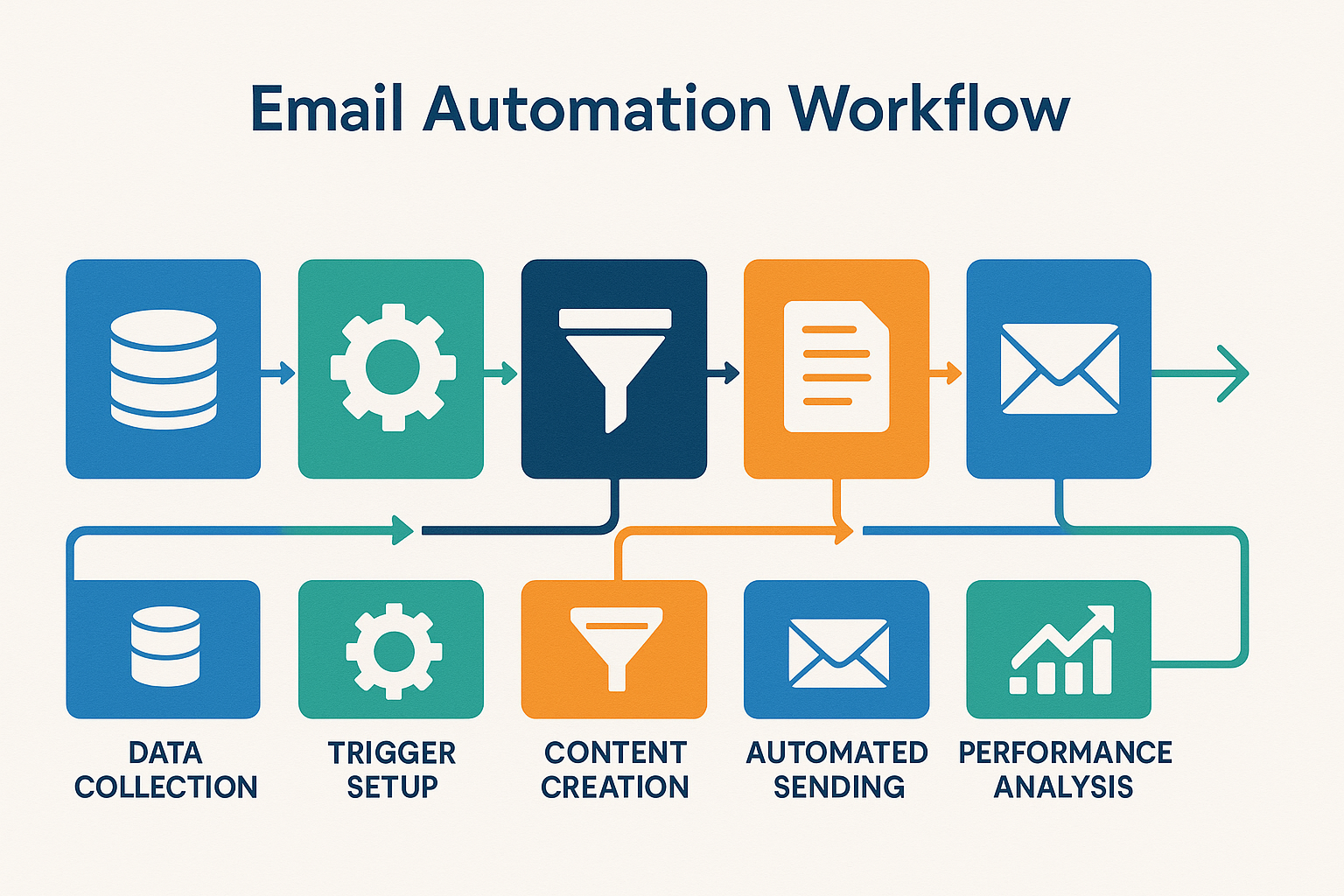
This is where AI-powered email produces its most dramatic results. Behavioral trigger emails, sent automatically in response to specific actions a subscriber takes, generate 10 times greater revenue than standard promotional emails. Abandoned cart sequences, post-purchase upsell flows, browse abandonment triggers, re-engagement campaigns triggered by inactivity, all of these respond to what a subscriber actually did rather than broadcasting to everyone simultaneously.
The performance difference between triggered automation and batch-and-blast campaigns is so large that if you're currently not running any behavioral automation, that's where your time should go before you spend a minute on AI subject line tools or send time optimization. The basics of behavioral email automation, welcome sequence, abandoned cart, post-purchase, re-engagement, will move your revenue numbers more than any other email investment.
The Personalization Hierarchy: Where to Start
Most email marketing guides present personalization as a binary: either you personalize or you don't. In practice, personalization has levels, and each level requires more data and infrastructure than the one before. Here's the hierarchy from simplest to most sophisticated.
Level one is name personalization: addressing subscribers by their first name in the subject line or opening. About 53% of marketers do this. It provides a modest lift in open rates, though its effectiveness has diminished as consumers have become habituated to seeing their name in subject lines. Worth doing, not worth spending significant effort on.
Level two is segment-based personalization: creating different email content for different audience segments based on demographics, purchase history, or behavior. This is where the 760% revenue advantage starts to materialize. Creating even three to five meaningful segments of your list and sending tailored content to each is dramatically more effective than one-size-fits-all broadcasts.
Level three is behavioral personalization: adapting email content based on what individual subscribers have done, browsed, purchased, or responded to previously. This is what the AI-powered sequence I mentioned at the start was doing, and it's where the 6x transaction rate lift comes from. Building this requires clean data integration between your email platform and your website analytics. Klaviyo's native Shopify integration makes this relatively accessible for e-commerce. For non-e-commerce, the setup is more complex but equally valuable.
Level four is predictive personalization: using machine learning to predict what a subscriber is likely to do next and sending email content that addresses that predicted behavior before it happens. This is the cutting edge of email personalization in 2026 and is primarily available in enterprise platforms. 39% of email professionals believe AI-driven hyperpersonalization will have the biggest effect on email campaigns going forward, and the early results from brands implementing it confirm that belief.
The Email Automation Workflows That Drive the Most Revenue
If you're building or rebuilding your email automation stack, here's the sequence I'd prioritize based on revenue impact per hour of setup time.
First: the welcome sequence. Every new subscriber should receive a 3-5 email welcome series over their first 7-14 days. This is the highest-leverage automation you can build because it captures the subscriber at their peak interest. A strong welcome sequence should introduce your brand and values, deliver on whatever promise got them to subscribe, share your most useful content, make a first purchase offer, and set expectations for ongoing communication. Automated welcome emails achieve a 43.3% average open rate and outperform all other automated email types in engagement.
Second: abandoned cart. If you run an e-commerce store and you're not sending abandoned cart emails, you're leaving significant revenue on the table every single day. A three-email abandoned cart sequence sent at one hour, 24 hours, and 72 hours after abandonment typically recovers 5-15% of abandoned carts depending on your product and audience. The first email is plain reminder with no discount. The second may include a small incentive. The third creates urgency or offers the discount more prominently.
Third: post-purchase sequence. The period immediately after a purchase is when customer sentiment is highest. A post-purchase sequence that thanks the customer, sets expectations for delivery, provides product tips, invites review submission, and makes a strategic cross-sell recommendation within the first 7-14 days post-purchase consistently generates 15-25% repeat purchase rates that cold marketing can't match.
Fourth: re-engagement campaign. Any subscriber who hasn't opened an email in 90-120 days is hurting your deliverability and contributing nothing to your revenue. A three-step re-engagement sequence, an "are you still interested" email with a compelling hook, a secondary outreach with a different angle or incentive, and a final "we'll remove you if we don't hear back" message, typically recovers 10-20% of dormant subscribers and identifies the rest for clean removal from your list.
The Tools Worth Using in 2026
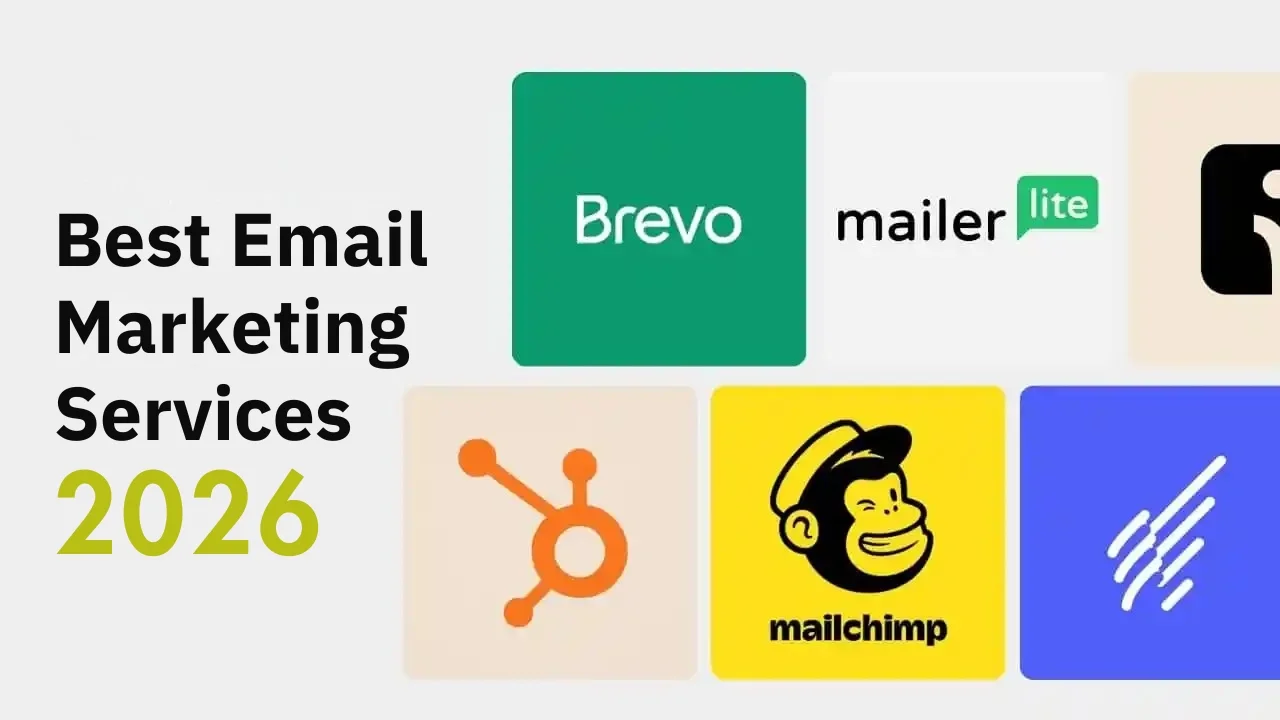
For e-commerce, Klaviyo is the clearest recommendation. Its behavioral data integration with Shopify and most major e-commerce platforms is the best available, and its predictive analytics (including predicted next order date and predicted lifetime value) make genuine behavioral personalization accessible without needing a data science team. It's not cheap at scale, but the revenue lift from proper Klaviyo implementation typically covers the platform cost within the first two months.
For content businesses, course creators, and SaaS: ConvertKit (now Kit) is strong for creator-focused email programs. ActiveCampaign offers more sophisticated automation logic for businesses with complex lead nurture flows. Both have meaningful AI features in 2026 for subject line testing and send time optimization.
For newsletters and media: Beehiiv has become the dominant platform for creator and media newsletters, with strong monetization tools and better growth features than most alternatives. I'll go deeper on newsletter monetization specifically in the dedicated article on that topic.
The one thing most email marketers get wrong: They use AI to send more email faster rather than to send more relevant email to fewer people. More volume without more relevance just trains your audience to ignore you faster and tanks your deliverability. The goal of AI in email is to make every send feel like it was written specifically for the recipient. That's what drives the 6x transaction rate lift. Sending more is easy and produces diminishing returns. Sending more relevant is hard and produces compounding returns.