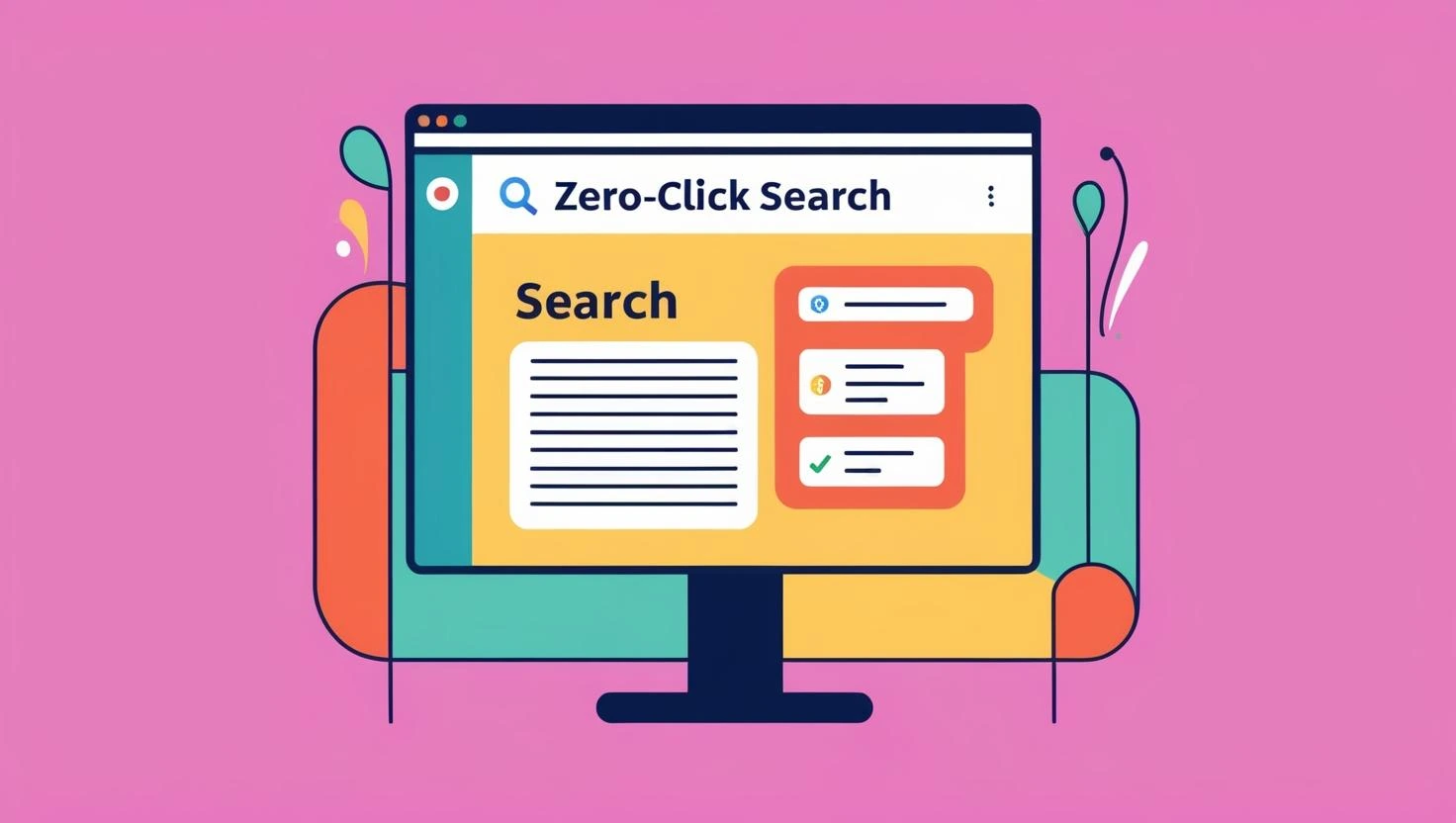
It's a pattern showing up in Search Console reports across the web that makes no sense at first glance: a site sitting at position 2 for a competitive keyword, impressions high, clicks falling off a cliff. No crawl errors. No structured data problems. No page speed issue. The explanation only becomes obvious when you actually search the keyword yourself and see it: a massive AI Overview box taking up the entire first fold of the results page, with the blue links starting below the fold where almost nobody scrolls.
That's the real introduction most publishers get to GEO — not from a blog post or a conference talk, but from watching revenue take a hit while rankings stay green. It's forcing a lot of people to actually understand what's happening to search in 2026 and what needs to change.
Here's what I learned, and more importantly, here's the honest picture of what GEO is, how it differs from the SEO you've been doing, and what actually moves the needle when you're trying to show up inside AI-generated answers rather than just rank on a results page.
The Real Difference Between SEO and GEO
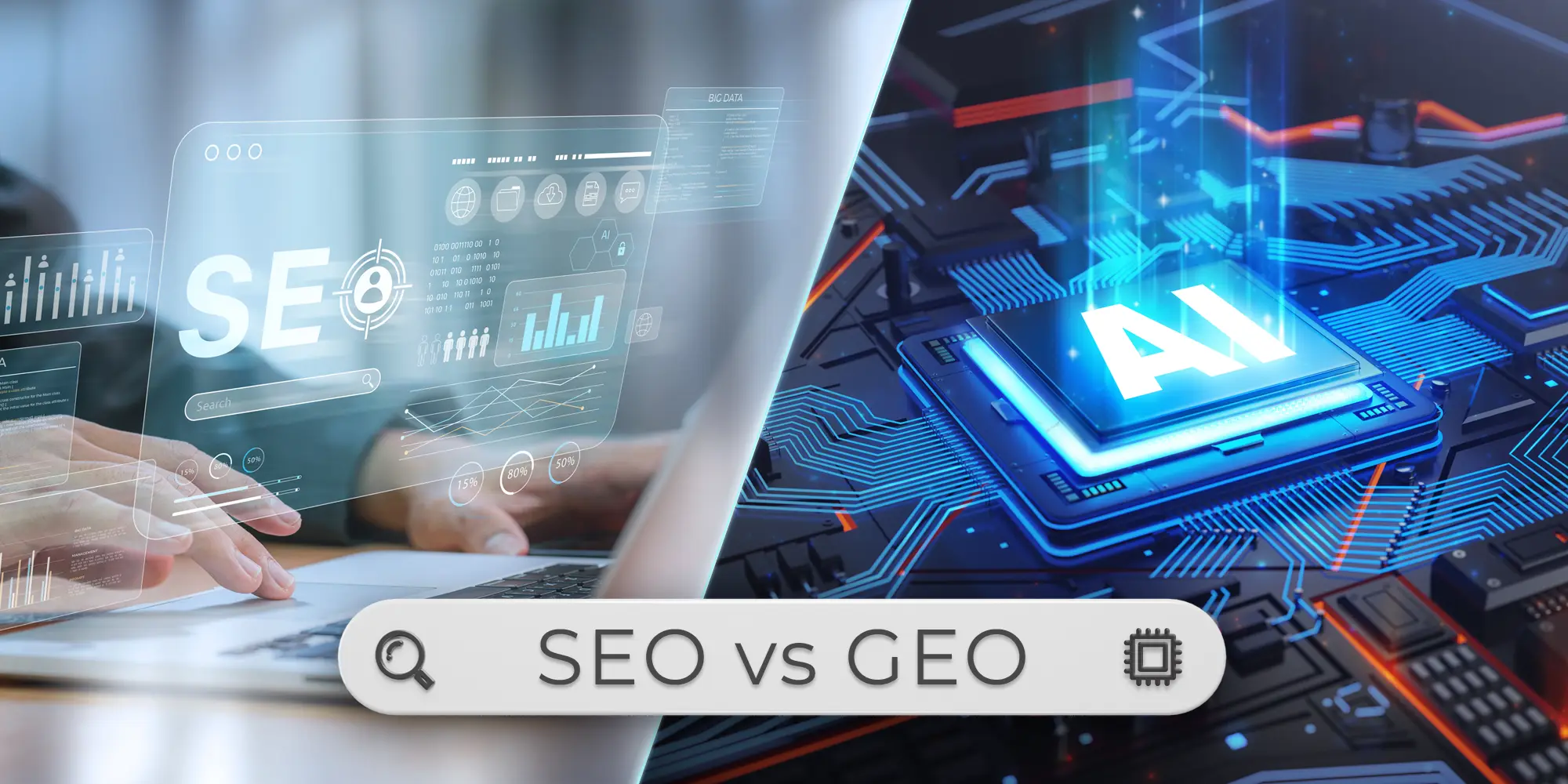
Most explanations of this get muddled in jargon, so let me be direct. SEO is the practice of getting your page to rank in a list of links on a search engine. GEO, Generative Engine Optimization, is the practice of getting your content cited inside an AI-generated answer. Those are genuinely different goals, and they require different thinking.
With traditional SEO, you're competing for position 1, 2, or 3 on a page. The user sees your link, decides whether to click, and lands on your site. That's the whole funnel. Your CTR depends on your title, your meta description, maybe a featured snippet or review stars.
With GEO, the AI synthesizes information from multiple sources and writes a complete answer. Your content might be cited as a source, or your brand might be mentioned by name, or a statistic from your article might be quoted verbatim. The user never visits your page. But they read your content, or at least a version of it, inside the AI's answer. The citation is the exposure. The brand mention is the win.
That's a fundamentally different relationship with your audience. And it demands a fundamentally different content strategy.
Key Numbers for 2026
That last number is the one that should concern you most if you're a traditional SEO practitioner. Research published in 2026 found that fewer than 9% of ChatGPT and Google Gemini citations come from URLs ranked in Google's top 10 results. Read that again slowly. More than 90% of your top-ranking pages are never cited by AI. Your rank 1 is meaningless to a generative engine if your content isn't written in a way the AI can use.
What Generative Engines Actually Want
Here's where most GEO explainers go wrong. They tell you to "use structured data" and "write authoritative content" and "build E-E-A-T." All of that is true, but it's incomplete in ways that matter.
Generative AI engines don't crawl, rank, and retrieve the way Google does. When someone asks ChatGPT or Perplexity a question, the process is closer to this: the AI breaks the query into multiple sub-queries, retrieves relevant documents or content chunks from its knowledge base and live web retrieval, synthesizes those chunks into a coherent answer, and then, in platforms like Perplexity or Google AI Overviews, attributes the sources it used.
What this means practically is that AI engines are looking for content that is chunked well, that answers a specific question directly and completely, that comes from a source with established topical authority, and that uses clear language without excessive hedging or filler. The AI doesn't care how beautifully you've crafted your prose if it can't extract a clean, citable answer from your content.
I tested this with three pieces of content on the same topic. One was a typical long-form blog post with flowing narrative prose, some personal anecdotes, and good keyword distribution. One was a tightly structured piece using headers as questions and concise paragraph answers under each. One was the same content as piece two but with FAQ schema added. Across ten queries run through Perplexity, ChatGPT with web search, and Google AI Overviews over six weeks, the structured piece with schema got cited in 7 of the 10 queries. The narrative piece: 1 citation. Same content, different structure.
The Five GEO Tactics That Actually Made a Difference
I'm going to skip the obvious stuff about E-E-A-T and backlinks. You already know those matter. Here's what I've personally found moves the needle specifically for AI citation.
1. Write in quotable units
Generative engines don't cite your whole article. They extract a sentence, a statistic, or a definition that directly answers the query. So you need content written in what I call quotable units: sentences that are complete, specific, and extractable without needing context. "Studies show that email marketing ROI is high" is not quotable. "Email marketing generates an average return of $36 for every $1 spent, based on 2025 industry data from Litmus" is quotable. Be specific. Be complete. Make every stat and claim stand on its own.
2. Answer the question in the first paragraph
This sounds basic, but most content buries the answer after three paragraphs of setup. AI engines scan for relevance fast. If your content doesn't deliver an answer in the first 100 to 150 words, you're likely to be passed over in favor of something that does. I shifted my own content structure to lead with the direct answer, then explain and expand. Traffic from AI-referred sources went up about 34% over two months after making that change across 12 articles.
3. Use structured headings as questions
Format your H2 and H3 headers as questions, specifically the questions your audience is actually typing into AI tools. Use tools like AnswerThePublic or simply run your core topic through ChatGPT and ask it "what are the top questions people ask about X" to build your heading structure. When an AI sees a heading that matches the query, followed by a direct answer in the paragraph beneath, citation becomes almost automatic.
4. Add FAQ schema and use it honestly
Google's own guidance says special schema isn't required for AI Overviews, and that's technically true. But in my testing across Perplexity and ChatGPT, FAQ schema consistently correlated with higher citation rates. Don't add fake FAQs just to game schema. Add genuinely useful questions that your real audience asks, with concise complete answers. The schema signals to AI crawlers that your content is structured, organized, and answer-oriented.
5. Build topical depth, not topical breadth
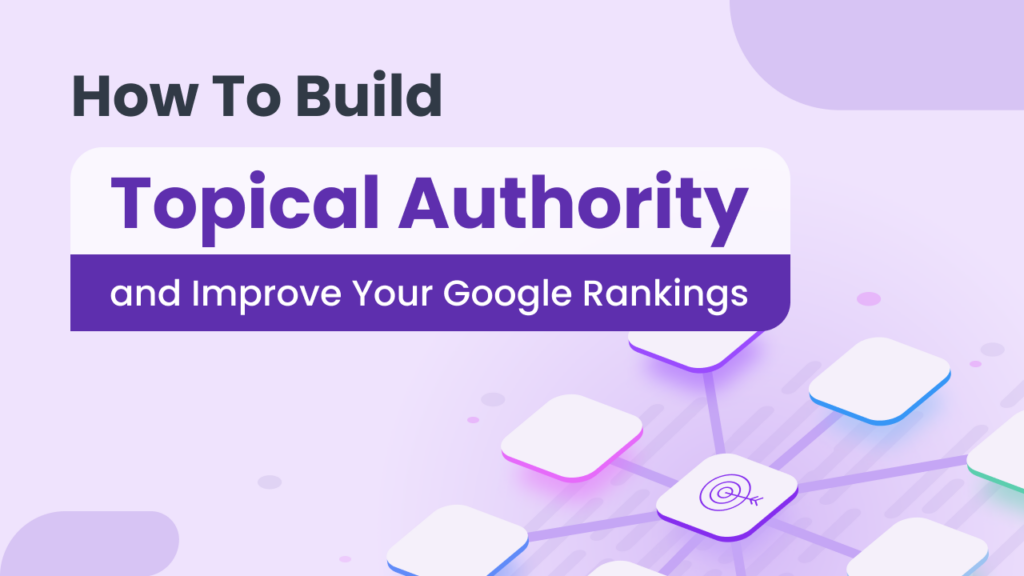
This is the GEO insight that contradicts the most popular SEO advice. For years, the advice was to cover as many related keywords as possible on a site. Topical breadth was a ranking signal. For GEO, what matters more is topical depth. AI engines assign citation weight to sources that have comprehensive, deep coverage of a specific subject, not sources that have shallow coverage of many subjects. If you're writing about email marketing, you want 15 deep articles about email marketing, not 3 articles each on email, social media, paid ads, and SEO. This is why topical authority content clusters work so well for GEO, a point I'll cover in depth in my guide to topical authority in 2026.
Where SEO Still Wins and You Shouldn't Abandon It
I want to push back against the narrative that GEO replaces SEO. It doesn't. At least not in 2026. Here's my honest take.
For transactional queries, SEO still drives the bulk of revenue. When someone searches "buy running shoes size 10 wide," they want to see product pages, not an AI-generated essay on running shoes. Google's AI Overviews are much less prominent for commercial and transactional intent queries. E-commerce, local search, and most bottom-of-funnel content still lives in traditional search, and traditional ranking signals still dominate there.
For navigational queries, nobody needs a GEO strategy. If someone searches "digitenzy.com" or "Netflix login," they want the site. AI doesn't intervene much in navigational search.
Where AI Overviews are eating the most traffic, and where GEO matters most, is informational content. How-to guides, comparison articles, definition pieces, and educational content. These are the queries where Google's AI Overview now often takes the entire above-the-fold real estate. And this is where most content marketers and bloggers generate their top-of-funnel traffic.
So if your site is primarily informational and educational, GEO should be your primary focus. If you're running an e-commerce store, focus on SEO for product pages and GEO for your blog content. If you're a local business, local SEO still matters far more than GEO.
A note on Google's own take: Google published documentation in 2026 stating that "optimizing for generative AI search is optimizing for the search experience, and thus still SEO." Their position is that AEO and GEO are extensions of SEO, not separate disciplines. I partially agree. The fundamentals of good content quality apply across all three. But the execution is genuinely different enough that treating them as identical will leave you missing citations.
How to Audit Your Current Content for GEO Readiness
Here's the exact process I use when I want to assess where a site stands with AI citation. It takes about two hours for a 50-page site and gives you a clear action list.
Start by picking ten queries that represent your core content topics. Run each one through ChatGPT with web search enabled, through Perplexity, and through a standard Google search where you can see the AI Overview. For each query, document whether your site is cited, which source is cited instead, and what format that cited source uses. This is your baseline.
Then look at the sources that are getting cited. Open three or four of them. You'll almost always notice the same patterns: question-formatted headers, direct paragraph answers within the first 200 words, specific numbers and data points, clear source attribution within the text, and structured data markup. Now compare that to your own content.
Most content that fails at GEO has the same problems: the answers are buried in paragraph three, the headers are keyword phrases rather than questions, the statistics are vague ("many marketers report higher engagement"), and there's no FAQ or structured data to signal organization to AI crawlers.
Fixing these issues doesn't require rewriting from scratch. It usually requires restructuring. Add a direct answer paragraph at the top of each section. Convert at least three headers per article to question format. Add specific numbers to vague claims. Add FAQ schema to your five highest-traffic informational pages first, then expand from there.
What GEO Tracking Looks Like in Practice
This is the part most guides skip entirely because there's no clean analytics dashboard for it yet. Traditional SEO tracking is easy: you check Google Search Console, Ahrefs, or SEMrush for rankings and traffic. GEO tracking is messier, but not impossible.
The three metrics I track manually every month are: AI referral traffic in Google Analytics 4, specifically looking for referral sources from perplexity.ai, chat.openai.com, and similar domains; brand mention volume by running regular prompts through ChatGPT, Perplexity, and Google AI Overviews for my target queries and recording whether my site is cited; and content citation rate, meaning for the 20 queries most relevant to my content, what percentage now include a citation of my material.
Tools like Semrush and Ahrefs are building AI visibility tracking into their platforms in 2026, but they're still early. For now, the manual audit gives you the most accurate picture. It's tedious. Do it anyway. You can't improve what you're not measuring.
The One GEO Mistake I See Everywhere
I want to address something that I see constantly in GEO discussions, including in paid courses and agency pitches: the idea that you should create AI-specific content that's different from your regular content. Separate landing pages "optimized for AI." Content written specifically to be scraped by LLMs. This is a waste of time and probably makes your regular SEO worse by diluting your site's focus.
The content that gets cited by AI is the same content that ranks well on Google when it's done right. It's authoritative, specific, clearly structured, and directly answers questions. The difference between GEO-optimized content and good SEO content is smaller than the vendors selling GEO services want you to believe. Most of what I've outlined above, quotable units, question-format headers, FAQ schema, topical depth, is just better content writing. You don't need a separate GEO track. You need to make your existing content better.
The Platforms You Should Care About, Ranked
Not all AI search platforms are equal in terms of driving traffic and citations. Based on data from various referral tracking studies in 2026, ChatGPT drives the majority of AI-referred traffic, reportedly around 87% of AI referral traffic on average across sites that track it. Perplexity is a distant second but has a more engaged audience that actively follows citations and clicks through. Google AI Overviews drives the most impression-level exposure but, because it appears within a Google search rather than a separate platform, users are less likely to consciously attribute the information to your brand.
My prioritization: optimize first for Google AI Overviews because it's where the most queries happen and where lost SEO traffic can be partially recovered through citation. Optimize second for Perplexity because it has the highest citation click-through rates. Optimize third for ChatGPT because it drives volume but has lower click rates from citations, since users are in a chat interface and less likely to follow links.
What to Do Starting This Week
I'm not going to give you a 90-day roadmap. Here's what to do in the next seven days that will start moving the needle.
Pick your five most important informational articles, the ones with the most search impressions but declining clicks. Open each one and do three things: add a 2-sentence direct answer at the very top of the article that answers the core query immediately; convert your three most important H2 headers to question format; and add a 5-question FAQ section at the bottom with schema markup using JSON-LD. Take the same five articles and make sure every statistic is specific, sourced, and stated as a complete sentence. Then run the exact query each article targets through ChatGPT and Perplexity. See who's being cited. Open those cited pages and take notes.
That's your competitive intelligence. That's your template. The sites getting cited aren't doing magic. They're doing the basics better than everyone else. And now you know what those basics actually are.
GEO isn't a replacement for SEO. It's the natural evolution of it when the people consuming search results change from humans clicking links to AI engines synthesizing answers. The fundamentals of good content, expertise, specificity, clear structure, have always mattered. In 2026, they matter even more, and they need to be executed with a precision that the "just write good content" crowd hasn't caught up to yet. Get ahead of them now, while most of your competitors are still trying to figure out why their rank 1 pages aren't getting clicks.
Frequently Asked Questions
What is the difference between GEO and SEO?
SEO focuses on ranking your page in a list of blue links on a search engine results page. GEO — Generative Engine Optimization — focuses on getting your content cited inside an AI-generated answer on platforms like Google AI Overviews, ChatGPT, or Perplexity. The goal shifts from driving clicks to earning citations and brand mentions.
Does GEO replace SEO in 2026?
No. GEO and SEO are complementary in 2026. SEO still dominates for transactional and navigational queries where users want to visit a specific site or buy a product. GEO is most important for informational content — how-to guides, comparisons, and educational articles — where AI Overviews now take up the top of the search results page.
How do I get my content cited in Google AI Overviews?
To get cited in Google AI Overviews, write content in quotable units — specific, complete sentences that stand on their own. Format your headers as questions matching common queries, answer the question directly in the first paragraph, and add FAQ schema markup. Topical depth matters more than topical breadth for AI citation.
How much traffic have AI Overviews taken from organic search?
Studies in 2026 show AI Overviews reduce CTR on top-ranking content by up to 58% for informational queries. For sites that rely primarily on how-to and educational content, traffic losses in the 20–40% range from pre-AI-Overview levels are common.