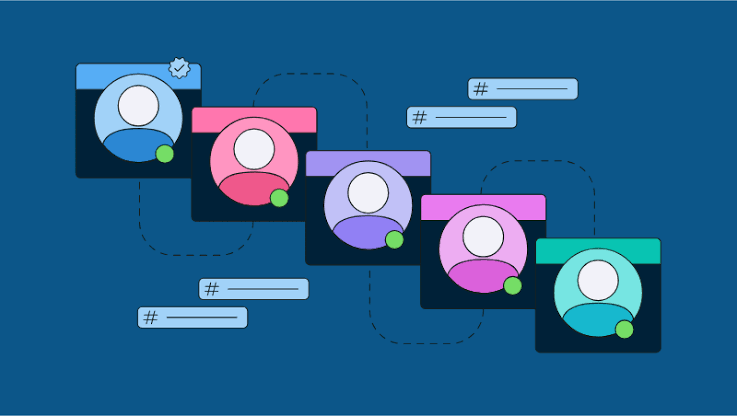
Every brand's social reach lives on rented land. Instagram changes its algorithm, TikTok gets threatened with a ban, X's reach for non paying accounts keeps sliding, and every time, the brands that built an actual community somewhere they control weather it fine, while the brands that only ever posted into the feed watch their reach evaporate overnight. A private Discord server or Facebook Group isn't a replacement for public social media. It's insurance against it, and increasingly it's where your highest intent, highest LTV customers actually want to be.
This isn't a new idea, but 2026 is when it stopped being optional for brands with real repeat purchase or retention businesses. Discord alone now has roughly 656 million registered users and well over 200 million monthly actives, with the platform's own growth data showing non gaming communities, creators, brands, study groups, professional networks, now expanding faster than gaming servers for the first time since the platform launched. Meanwhile Facebook Groups still pull in well over a billion monthly active participants worldwide, and users who belong to at least one group consistently spend multiples more time inside group environments than in standard feed browsing. Here's how to build one that doesn't die three months after launch, which is what happens to most of them.
Discord vs Facebook Groups: Which Fits Your Brand
These two platforms attract genuinely different audiences and behaviors, and picking the wrong one is the most common reason a brand community fails to gain traction in its first 90 days.
Discord vs Facebook Groups: Quick Comparison
If your brand skews younger, technical, or creator adjacent, Discord's real time channel structure and voice and video tooling support the kind of ongoing, casual conversation that keeps a community alive between your posts, and Discord's own data shows average server lifespan running well beyond a typical Facebook Group's. If your audience is older, less online native, or your product touches everyday life (parenting products, home goods, local services), Facebook Groups' feed based, easier to browse format tends to get meaningfully higher long term engagement, because members don't need to learn a new interface to participate.
The First 90 Days: Structure Before Content
The single biggest mistake brands make when launching a community is opening it up and immediately starting to post content into it, the same way they'd post to a feed. A community with one voice talking at everyone isn't a community. It's a newsletter with extra steps, and members can feel that within their first visit.
- Seed it before you announce it. Invite 15 to 30 of your most engaged existing customers privately first. Let genuine conversation happen for two to three weeks before any public launch. An empty room kills momentum for every new member who walks in after.
- Build channel and topic structure around member goals, not your marketing calendar. A channel called #wins or #show-and-tell where members post their own results generates far more return visits than a channel called #announcements.
- Assign at least one non founder community manager early. Communities that only get attention from the founder or brand account feel transactional. A dedicated community lead who shows up daily, remembers names, and responds fast is what actually builds retention.
- Set explicit rules on day one, not after the first incident. Vague or absent rules are the top reason communities either become toxic or become a graveyard of unanswered questions nobody wants to be first to post in.
Benchmark to aim for: Community platforms increasingly track "activation rate," the share of new members who engage within their first few days, as a better health signal than raw member count. A healthy branded community should see a meaningful share of members actively posting or reacting (not just reading) in any given week by month three. A server or group that's growing in headcount but flat or declining in weekly active participation signals a structure or moderation problem, not a content problem. More posts from the brand account almost never fixes it.
Rules, Moderation, and Keeping a Community From Rotting
Communities don't die from too many rules. They die from ambiguity: members not knowing what's welcome, staff not responding consistently, and low effort spam or self promotion going unchecked until real members start posting less to avoid the noise. Write rules that are specific and enforceable: no unsolicited DMs between members, no competitor promotion, a clear escalation path for disputes, and a stated response time expectation from your team (even "we respond within 24 hours on weekdays" sets the tone that someone is actually watching).
Use a light moderation bot (Discord's built in AutoMod, or a Facebook Group's keyword filtering and approval queue tools) to catch obvious spam automatically so your human moderators are spending time on judgment calls, not repetitive cleanup. Review your moderation logs weekly for the first six months. Patterns in what gets flagged tell you where your rules are unclear faster than any survey will. As your server scales past a few thousand members, expect to move from one moderator to a moderator plus AI triage setup. Several community platforms are already building this into their tooling for exactly that reason.
Metrics That Actually Predict Whether a Community Will Survive
Total member count is the metric brands obsess over and the one that predicts survival least well. A server with 8,000 members and 40 weekly active posters is dying slowly. A server with 800 members and 200 weekly active posters is thriving. The metrics worth tracking instead: activation rate (percentage of new members who post or react within their first week), returning participant rate (share of active members who show up again the following week), and event attendance trend over time, since a community's live events are usually the earliest signal of waning interest, well before overall posting volume drops.
Support deflection is worth tracking too, especially for product based brands. A community that's genuinely useful will start answering member questions before your support team does, and that ratio (community answered versus staff answered) climbing over time is one of the clearest signs the space has become self sustaining rather than dependent on constant brand input.
Turning Community Into Revenue Without Killing the Vibe
The fastest way to kill a brand community is to treat it as a sales channel from day one. The right sequence is: build genuine engagement first, let members become advocates organically, and only then introduce commercial elements, and even then, sparingly and clearly labeled.
What actually works: early access to new products or features for community members only, direct feedback loops where members see their suggestions shipped and get credited, member only discount codes that feel like a reward rather than a pitch, and occasional AMAs with your product or founding team that treat members as insiders rather than an audience. On Discord specifically, tiered access via paid roles, a free general tier plus a paid tier with extra channels, direct access, or perks, has become a common lightweight monetization layer for creator and brand communities alike, without requiring a separate membership platform.
The community's commercial value shows up indirectly, in retention, in referral rate, and in the qualitative product feedback you'd otherwise pay a research firm for, more than it shows up as a direct sales channel. Brands running an active owned community consistently report meaningfully higher customer retention and referral driven conversion than brands relying on public social feeds alone, which is the actual argument for investing the operational effort a community requires.
Frequently Asked Questions
Discord or Facebook Groups for a brand community?
Discord tends to work better for younger, technical, or creator adjacent audiences due to its real time chat culture and voice and video tooling, while Facebook Groups generally get stronger long term engagement from older or less online native audiences because of the familiar feed based format.
How many members should a brand community have before it feels active?
Activity rate matters more than raw member count. Track activation rate (new members who engage in their first few days) and weekly active members rather than total headcount. A community with a few hundred highly active members feels far more alive than one with thousands of silent joins.
Should a brand community be free or paid?
Start free to build genuine engagement and prove the format works for your audience. Paid or gated tiers work best once you have a proven, active free community to convert from. Launching a paid community cold, without an existing engaged base, has a much higher failure rate.