A first TikTok Ads campaign losing money is one of the most common early mistakes advertisers make on the platform — and the reflexive conclusion is almost always wrong. A B2B product spends a few hundred dollars, generates thousands of impressions, a handful of clicks, and zero conversions, and the platform gets written off as "a Gen Z app that doesn't work for enterprise buyers."
That conclusion is usually backwards. The problem is almost always the creative, not the platform. A product image or ad that worked on Google Shopping, run as a TikTok video ad with a logo watermark and a branded lower third, gets punished by TikTok's algorithm and scrolled straight past. Switch to a native-looking video — no watermark, no branded overlay, filmed vertically like organic content — and CPM routinely drops by a large margin while conversions start coming in.
TikTok Ads work. But they work differently from every other paid platform, and understanding that difference is what this guide is about.
Why TikTok Ads in 2026
TikTok has 1.9 billion monthly active users globally, with especially deep penetration in the 18-34 demographic. More importantly for advertisers, the platform's CPMs remain significantly lower than Meta and Google — averaging $9.50 versus $14+ on Facebook and $38+ on Google Search.
That gap is narrowing as more advertisers pile in, which is exactly why 2026 is still a good time to learn the platform rather than wait. The brands running TikTok Ads now are building audience data, creative libraries, and algorithm familiarity that will be worth a lot more as competition increases.
The core TikTok Ads advantage in 2026: Lower CPMs than Meta, a younger-skewing audience that is highly purchase-intent on the right categories, and a creative format that rewards authenticity over production value — which levels the playing field for smaller advertisers.
Campaign Structure: Three Levels
TikTok Ads Manager mirrors Meta's three-tier structure: Campaign, Ad Group, and Ad. Understanding what each level controls is essential before spending a dollar.
Campaign level sets your objective. For most beginners, the right choice is Website Conversions (if you have a pixel installed) or Traffic (if you're starting without conversion data). App installs, lead generation, and reach are also available but require different setups.
Ad Group level is where you set budget, schedule, targeting, placement, and bidding. For a beginner campaign, start with one ad group per campaign. Once you have data, you can duplicate and test different audience segments.
Ad level is your creative. This is where TikTok is most different from Meta. On TikTok, the creative is not just a component — it is the campaign. Poor creative kills good targeting. Good creative can overcome weak targeting because TikTok's interest-based distribution finds relevant audiences automatically.
| Level | What You Control | Key Decision |
|---|---|---|
| Campaign | Objective, campaign budget (optional) | Conversions vs Traffic |
| Ad Group | Budget, targeting, placement, bidding | Broad vs interest targeting |
| Ad | Video creative, copy, CTA, landing page | Native-feel vs polished production |
Targeting: Broad Works Better Than You Think
Coming from Facebook Ads, most beginners over-narrow their TikTok targeting. TikTok's algorithm is actually very good at finding relevant users when given enough signal from your creative and pixel data. Tight interest stacking can restrict delivery and inflate CPMs unnecessarily.
For a beginner campaign, start with age targeting (pick the range appropriate to your product), location (your target markets), and one or two broad interest categories. Don't layer in behavioral targeting, lookalikes, and exclusions from day one. Let the algorithm learn.
Once you have 50+ conversion events tracked, TikTok's lookalike audiences become genuinely useful. Before that threshold, you don't have enough signal for them to outperform broad targeting.
Creative: This Is What Actually Matters
Every TikTok advertiser eventually learns the same lesson: the algorithm rewards content that looks like it belongs on the platform. Videos that look like ads get scrolled past. Videos that look like organic content get watched, shared, and clicked.
What does native TikTok creative look like in practice? Vertical format (9:16). No watermarks or logos in the first 3 seconds. A hook in the first 1-2 seconds that creates curiosity or pattern interruption. Captions that work even without sound (a majority of views happen in silent environments). Music from TikTok's Commercial Music Library (not your own audio). A clear, low-pressure CTA at the end.
The single highest-performing TikTok ad format in 2026 remains the UGC-style testimonial or demo. Someone holding or using your product, talking to the camera, in a normal environment. No studio lighting. No scripted delivery. The less it looks like an ad, the better it tends to perform.
The hook is everything: TikTok measures and rewards videos that get watched beyond the first 3 seconds. Ads that open with a visual surprise, a bold claim, or a direct question consistently outperform branded openers. Test multiple hooks — the difference between a 5% and 25% watch rate at 3 seconds is often the entire campaign's profitability.
Budget and Bidding for Beginners
TikTok's minimum daily budget is $20 at the ad group level and $50 at the campaign level. For a beginner testing the platform, start with $20-50 per day per ad group. This is enough for meaningful data collection without overexposing a single creative before you know if it works.
For bidding, new campaigns should use the default Lowest Cost bidding (formerly called Automatic Bidding). This tells TikTok to get you the most conversions or clicks possible within your budget. Cost Cap and Bid Cap exist but require more data and experience to use effectively — they can starve delivery in the learning phase if set too conservatively.
The learning phase on TikTok is real and matters. Campaigns typically need 50 optimization events before the algorithm stabilizes. For website conversions, that means 50 purchases (or your defined conversion event). During this phase, avoid making major changes to targeting, bidding, or creative — every significant change resets the learning counter.
Pixel Setup: Do This Before Anything Else
If you run TikTok Ads without the TikTok Pixel, you're flying blind. The pixel reports back which users converted after seeing your ad, which is how TikTok optimizes for conversions rather than just clicks.
Install the TikTok Pixel on your website through TikTok Events Manager. If you're on Shopify, the TikTok app installs it automatically. For other platforms, install via Google Tag Manager. Set up the following events at minimum: ViewContent (product page), AddToCart, InitiateCheckout, and Purchase. Test each event fires correctly using the TikTok Pixel Helper Chrome extension before spending any money.
The Three Mistakes That Kill Beginner Campaigns
Mistake 1: Changing things too fast. TikTok's algorithm needs time to learn. The most common beginner mistake is pausing ads after two days because they haven't converted yet, then restarting with a new creative. Every restart resets learning. Give campaigns at least 7 days before making major decisions.
Mistake 2: Sending traffic to a weak landing page. TikTok can drive traffic — but if your landing page takes 5 seconds to load, doesn't work on mobile, or has a confusing value proposition, the traffic will bounce. Run a PageSpeed Insights test on your landing page before launching. Mobile load time under 3 seconds is the baseline.
Mistake 3: Using one creative per campaign. TikTok rewards creative diversity. Upload 3-5 ad variations per ad group (different hooks, different formats, same product). The algorithm will automatically allocate more budget to whichever performs best. Campaigns with multiple creatives consistently outperform single-creative campaigns on TikTok.
A Realistic First-Month Budget Plan
If you're starting with $500 for your first month, here is a structure that makes sense: spend the first two weeks at $15-20 per day across two ad groups testing different audiences — one broad, one interest-targeted. Focus the budget on generating clicks and learning which audience responds. In weeks three and four, consolidate to the better-performing ad group, increase budget to $25-30 per day, and test three to four creative variations. By end of month, you will have enough data to know whether the platform is viable for your offer.
$500 will not make you profitable in month one. That is not the goal. The goal is to collect enough data to know what works — and TikTok's lower CPMs mean your $500 buys more data than the same spend on Meta.
The Bottom Line
TikTok Ads in 2026 represent one of the last genuinely accessible paid acquisition channels for smaller advertisers. CPMs are still lower than Meta. The algorithm still rewards creative quality over budget size. And the platform's reach into the 18-40 demographic continues to expand as the user base ages up.
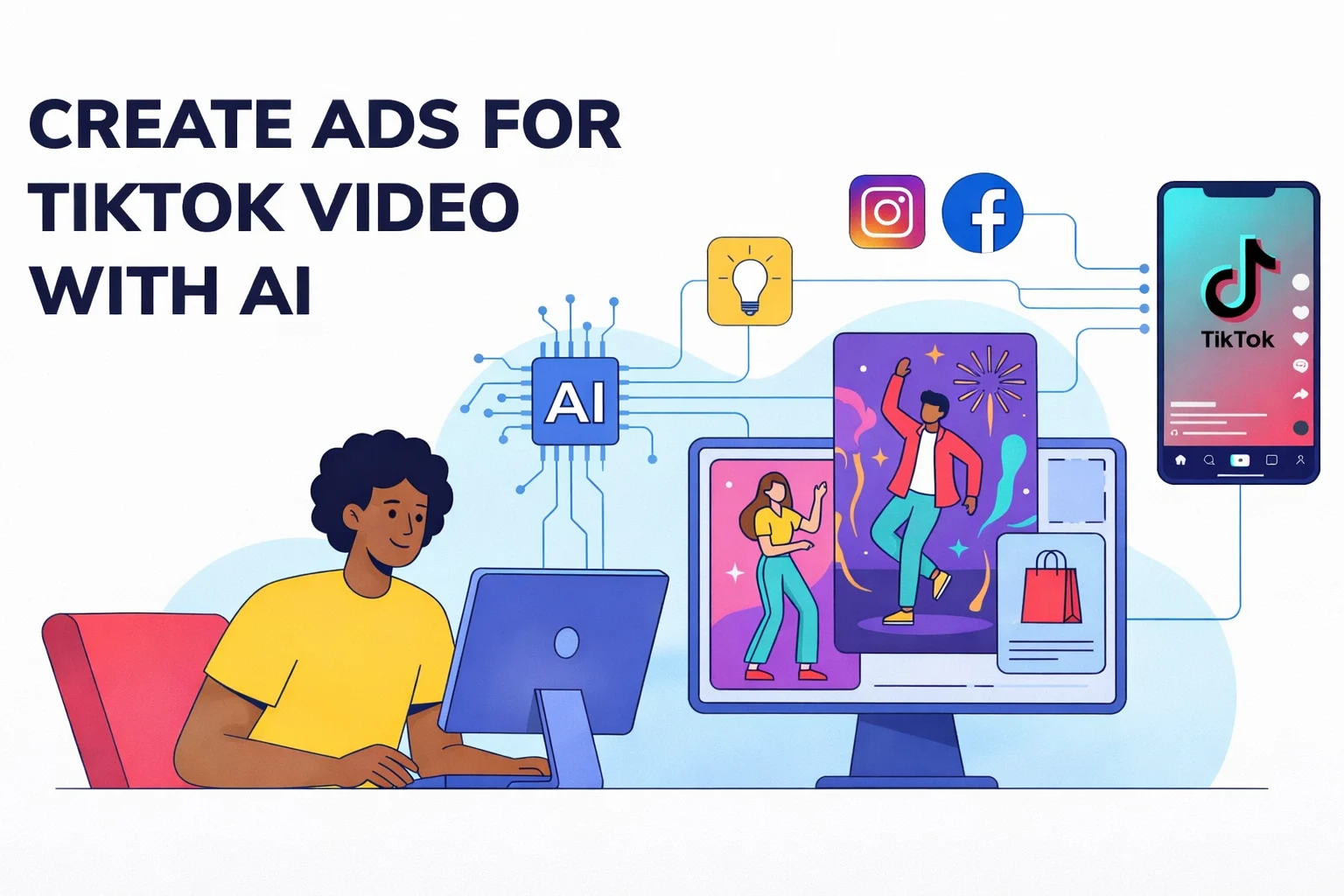
The barrier is creative, not budget. If you can produce or source native-looking TikTok video content — whether from UGC creators, your own team, or AI-assisted tools — you can run competitive campaigns on budgets that would be laughably small on Google. The platform rewards the advertiser who understands its culture, not the one with the biggest checkbook.